
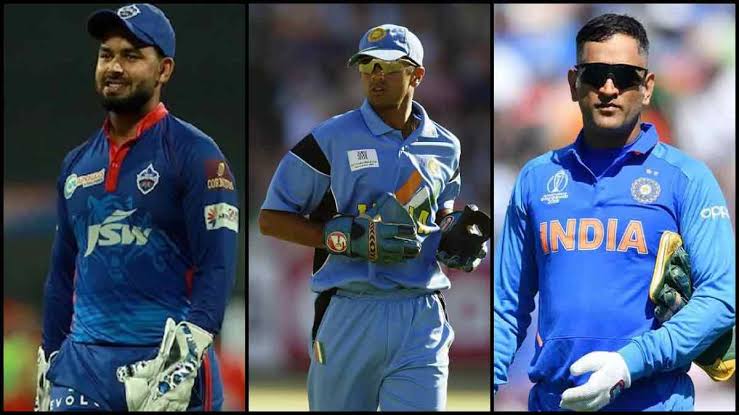
Indian cricket has produced several outstanding wicketkeepers since the country played its first Test match in 1932. From Janardan Navle and Naren Tamhane to MS Dhoni and Rishabh Pant, every generation has contributed something different to the position.
Some became famous for their technique behind the stumps, while others changed the role through aggressive batting and leadership. The history of Indian wicketkeepers also reflects how cricket itself has evolved across Test, ODI and T20I formats.
Chronological History of Indian Wicketkeepers (1932 to 2026)
The following table presents India’s wicketkeepers across different generations, including their international careers, formats and recorded dismissals. It includes specialist wicketkeepers as well as players who kept wickets part time.
| Era | Player | International Span | Formats | Matches | Catches | Stumpings | Dismissals |
| Early Pioneers | Janardan Navle | 1932 to 1933 | Test | 2 | 1 | 0 | 1 |
| Early Pioneers | Dilawar Hussain | 1934 to 1936 | Test | 3 | 6 | 1 | 7 |
| Early Pioneers | Dattaram Hindlekar | 1936 to 1946 | Test | 4 | 3 | 0 | 3 |
| Early Pioneers | Khokhan Sen | 1948 to 1952 | Test | 14 | 20 | 11 | 31 |
| Early Pioneers | Nana Joshi | 1951 to 1960 | Test | 12 | 18 | 9 | 27 |
| Early Pioneers | Naren Tamhane | 1955 to 1961 | Test | 21 | 35 | 16 | 51 |
| Spin and Golden Era | Budhi Kunderan | 1960 to 1967 | Test | 18 | 21 | 7 | 28 |
| Spin and Golden Era | Farokh Engineer | 1961 to 1975 | Test, ODI | 51 | 69 | 17 | 86 |
| Spin and Golden Era | Syed Kirmani | 1976 to 1986 | Test, ODI | 137 | 187 | 47 | 234 |
| Transition Era | Kiran More | 1984 to 1993 | Test, ODI | 143 | 173 | 47 | 220 |
| Transition Era | Chandrakant Pandit | 1986 to 1992 | Test, ODI | 41 | 26 | 17 | 43 |
| Transition Era | Sadanand Viswanath | 1985 to 1988 | Test, ODI | 25 | 28 | 7 | 35 |
| Transition Era | Nayan Mongia | 1994 to 2001 | Test, ODI | 184 | 209 | 52 | 261 |
| Selection Phase | Saba Karim | 1997 to 2000 | Test, ODI | 35 | 28 | 3 | 31 |
| Selection Phase | MSK Prasad | 1998 to 2000 | Test, ODI | 23 | 29 | 7 | 36 |
| Selection Phase | Rahul Dravid | 1999 to 2004 | ODI | 504 | 72 | 14 | 86 |
| Selection Phase | Sameer Dighe | 2000 to 2001 | Test, ODI | 29 | 31 | 7 | 38 |
| Selection Phase | Vijay Dahiya | 2000 to 2001 | Test, ODI | 21 | 25 | 5 | 30 |
| Selection Phase | Deep Dasgupta | 2001 to 2002 | Test, ODI | 13 | 15 | 1 | 16 |
| Selection Phase | Ajay Ratra | 2002 | Test, ODI | 18 | 22 | 7 | 29 |
| Selection Phase | Parthiv Patel | 2002 to 2018 | Test, ODI, T20I | 65 | 93 | 19 | 112 |
| Selection Phase | Dinesh Karthik | 2004 to 2022 | Test, ODI, T20I | 179 | 105 | 21 | 126 |
| Dhoni Era | MS Dhoni | 2004 to 2019 | Test, ODI, T20I | 535 | 634 | 195 | 829 |
| Dhoni Era | Wriddhiman Saha | 2010 to 2021 | Test, ODI | 49 | 109 | 13 | 122 |
| Modern Era | KL Rahul | 2014 to Present | Test, ODI, T20I | 248 | 89 | 10 | 99 |
| Modern Era | Sanju Samson | 2015 to Present | ODI, T20I | 88 | 45 | 8 | 53 |
| Modern Era | Rishabh Pant | 2017 to Present | Test, ODI, T20I | 161 | 235 | 30 | 265 |
| Modern Era | Ishan Kishan | 2021 to Present | Test, ODI, T20I | 68 | 36 | 9 | 45 |
| Modern Era | KS Bharat | 2023 to 2024 | Test | 7 | 18 | 1 | 19 |
| Modern Era | Jitesh Sharma | 2023 to Present | T20I | 16 | 9 | 2 | 11 |
| Modern Era | Dhruv Jurel | 2024 to Present | Test, T20I | 18 | 16 | 3 | 19 |
The table follows the supplied chronological dataset, with MS Dhoni’s combined dismissal total updated to 829, including 634 catches and 195 stumpings. Match totals in the source dataset should not be interpreted as matches kept in every case. Rahul Dravid, for example, was a part time wicketkeeper. Current career figures can change as active players represent India.
Indian Wicket Keepers Through the Years: Explanation of Every Era
1. Early Pioneers: 1932 to 1961
Janardan Navle holds a special place in Indian cricket history as the country’s first Test wicketkeeper. He played in India’s debut Test against England at Lord’s in June 1932. His international career was brief, but he helped establish the position in the national team.
Dilawar Hussain and Dattaram Hindlekar followed during the early years. Their opportunities were limited because India played fewer international matches during this period.
Khokhan Sen, Nana Joshi and Naren Tamhane represented the next generation. Tamhane was particularly effective, recording 51 Test dismissals in 21 matches. His record included 35 catches and 16 stumpings. These players helped build the foundation for Indian wicketkeeping.
2. Budhi Kunderan and Farokh Engineer: 1960s to 1970s
The 1960s brought a more attacking approach to wicketkeeping. Budhi Kunderan was known for his aggressive batting and ability to contribute at the top of the order.
Farokh Engineer became one of India’s most recognised wicketkeeper batters. He played 46 Tests and five ODIs, recording 82 Test dismissals and four ODI dismissals. His attacking batting made him valuable beyond his work behind the stumps.
Engineer also played county cricket for Lancashire. His performances helped establish the idea that an Indian wicketkeeper could be an important batting option as well.
3. Syed Kirmani: India’s Reliable Keeper of the 1980s
Syed Kirmani is widely regarded as one of India’s finest traditional wicketkeepers. He represented India from 1976 to 1986 and became an important member of the team that won the 1983 Cricket World Cup.
Kirmani recorded 198 dismissals in 88 Tests, including 160 catches and 38 stumpings. His concentration, technique and consistency made him a dependable presence behind the stumps.
He also contributed with the bat when required. His unbeaten 24 against the West Indies in the 1983 World Cup semi final helped India reach the final. Kirmani set a high standard for future Indian wicketkeepers.
4. Kiran More and Nayan Mongia: The 1980s and 1990s
Kiran More became India’s first choice wicketkeeper during much of the late 1980s and early 1990s. He was known for his energetic approach, sharp reflexes and ability to handle spin bowling.
Nayan Mongia took over the position in the 1990s. He recorded 261 international dismissals, including 209 catches and 52 stumpings, according to the supplied combined record.
Mongia also contributed useful runs. His aggressive batting and long international career made him an important player during a period when India was searching for consistency behind the stumps.
5. The 1999 to 2004 Selection Phase
India tried several wicketkeepers around the turn of the century. Saba Karim, MSK Prasad, Sameer Dighe, Vijay Dahiya, Deep Dasgupta and Ajay Ratra all received opportunities.
Rahul Dravid also kept wickets in several ODIs. His part time role allowed India to include an additional specialist batter in the playing eleven. His 86 recorded dismissals in the supplied dataset show how frequently he contributed behind the stumps.
Parthiv Patel made his international debut in 2002 at just 17 years old. Dinesh Karthik followed in 2004. Both enjoyed long careers, although competition for the position remained strong.
6. MS Dhoni: The Most Influential Modern Indian Wicketkeeper
MS Dhoni changed expectations from an Indian wicketkeeper. He made his ODI debut in 2004 and quickly became known for his powerful batting, quick hands and lightning fast stumpings.
Dhoni finished his international career in 2019. His combined record stands at 829 dismissals, comprising 634 catches and 195 stumpings. He also holds the record for the most international stumpings.
His achievements as captain made his career even more significant. He led India to the 2007 T20 World Cup, 2011 Cricket World Cup and 2013 Champions Trophy titles. Dhoni’s impact went beyond keeping wickets. He became one of the most successful leaders in Indian cricket.
7. Wriddhiman Saha: The Specialist Test Wicketkeeper
Wriddhiman Saha represented India from 2010 to 2021. He earned a reputation as a technically sound wicketkeeper, particularly in Test cricket.
Saha recorded 104 dismissals in 39 Tests in the Test keeping records, including 92 catches and 12 stumpings. His ability to handle difficult conditions and stand up to spinners made him a valuable option.
He competed with Dhoni and later Rishabh Pant for the Test position. His career demonstrated the importance of specialist wicketkeeping even as batting became a bigger part of the role.
8. The Modern Generation: Rishabh Pant, KL Rahul and Others
The modern era has brought greater flexibility across formats. Rishabh Pant, KL Rahul, Sanju Samson, Ishan Kishan, KS Bharat, Dhruv Jurel and Jitesh Sharma have all represented India as wicketkeepers.
Pant has become one of India’s most exciting wicketkeeper batters. His attacking approach and ability to score under pressure have produced memorable Test performances, including important innings overseas.
KL Rahul has frequently taken the gloves in limited overs cricket, allowing India to maintain batting depth. Samson and Kishan have offered attacking options in white ball formats.
Dhruv Jurel has emerged as a promising Test wicketkeeper, while Jitesh Sharma has received opportunities in T20I cricket. This generation reflects India’s preference for players who can contribute with both the gloves and the bat.
Who was the first wicketkeeper to represent India in Test cricket?
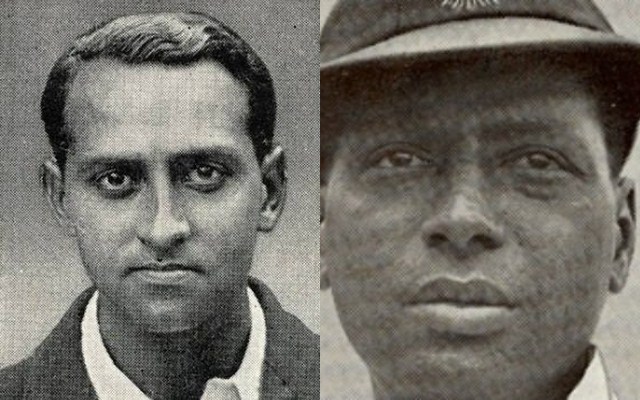
Janardan Navle was the first wicketkeeper of the Indian cricket team. He made his debut in India’s first Test match against England at Lord’s in June 1932, becoming the first player to keep wickets for India in Test cricket.
Which Indian Wicketkeeper Has the Most Test Dismissals?
MS Dhoni holds the record for the most Test dismissals by an Indian wicketkeeper, with 294. Syed Kirmani is second with 198, while Rishabh Pant has moved into third place.
| Rank | Wicketkeeper | Tests Kept | Catches | Stumpings | Total Dismissals |
| 1 | MS Dhoni | 90 | 256 | 38 | 294 |
| 2 | Syed Kirmani | 88 | 160 | 38 | 198 |
| 3 | Rishabh Pant | 52 | 166 | 18 | 184 |
| 4 | Kiran More | 49 | 110 | 20 | 130 |
| 5 | Nayan Mongia | 44 | 99 | 8 | 107 |
| 6 | Wriddhiman Saha | 39 | 92 | 12 | 104 |
| 7 | Farokh Engineer | 46 | 66 | 16 | 82 |
| 8 | Parthiv Patel | 25 | 62 | 10 | 72 |
| 9 | Dinesh Karthik | 19 | 51 | 6 | 57 |
| 10 | Naren Tamhane | 21 | 35 | 16 | 51 |
Figures are based on the Test wicketkeeping records updated in November 2026. Tests kept refers to matches in which the player actually performed wicketkeeping duties.
Dhoni leads the list because of his consistency across a long Test career. Kirmani remains second, while Pant has reached 184 dismissals in 52 Tests. Pant’s progress is particularly notable because he has accumulated his record in fewer matches than the two players above him.
How Has the Role of Indian Wicketkeepers Changed?
The role has developed considerably since India’s first Test in 1932.
- Early years: Wicketkeepers mainly focused on catching, stumpings and supporting the bowlers.
- 1960s and 1970s: Kunderan and Engineer showed that wicketkeepers could also make important batting contributions.
- 1980s and 1990s: Kirmani, More and Mongia brought consistency and strong technical skills.
- Dhoni era: MS Dhoni combined exceptional glovework with aggressive batting and successful captaincy.
- Modern cricket: Pant, Rahul and Samson offer flexibility, batting depth and options across formats.
Today, teams expect wicketkeepers to handle fast bowlers, stand up to spinners, communicate with the captain and score important runs. The position has become one of the most demanding roles in the playing eleven.
Conclusion
The history of Indian wicketkeepers reflects the wider development of Indian cricket. Janardan Navle began the journey in 1932, while Farokh Engineer, Syed Kirmani, Kiran More and Nayan Mongia strengthened the position over the following decades. MS Dhoni took it to another level through his records, batting and leadership. Rishabh Pant and the current generation are carrying that legacy forward.
Every era has produced a different kind of wicketkeeper, but the importance of reliable work behind the stumps has remained constant.
FAQs
Janardan Navle was India’s first Test wicketkeeper. He represented India in its first Test match against England in 1932.
MS Dhoni holds the record with 829 international dismissals, including 634 catches and 195 stumpings.
MS Dhoni leads the Indian Test wicketkeeping list with 294 dismissals, including 256 catches and 38 stumpings.
Syed Kirmani was India’s main wicketkeeper during the 1983 Cricket World Cup, which India won under Kapil Dev’s captaincy.
Rishabh Pant, KL Rahul, Sanju Samson, Ishan Kishan and Dhruv Jurel are among the notable wicketkeepers who have represented India in recent years.